Getting goods across international borders sounds straightforward until it isn’t. One misfiled document, an overlooked tariff classification, a biosecurity flag nobody anticipated, and suddenly a shipment worth ten and thousands of dollars is sitting in a customs hold while demurrage charges quietly accumulate. This is the reality that businesses importing and exporting through Melbourne face every week, and it’s exactly why choosing the right freight forwarder matters far more than most people realise until they’ve made a costly mistake.
This guide cuts through the noise. Whether you’re a business owner navigating international freight for the first time or an experienced importer who’s ready to switch to a more capable logistics partner, here’s what you need to know about freight forwarding services in Melbourne in 2026, what to look for, what to avoid, and why the right partner changes the entire equation.
Why Melbourne Is One of Australia’s Most Active Trade Hubs
Melbourne’s position in the Australian logistics landscape is hard to overstate. The Port of Melbourne is the country’s largest container port, processing record throughput volumes year after year, and the 2025 launch of the Somerton Intermodal Terminal has added significant capacity for last-mile freight efficiency into Melbourne’s consumer and commercial hubs.
The broader numbers give context to what that means for businesses operating here. Australia’s freight forwarding market is valued at USD 3.47 billion in 2025 and is projected to reach USD 4.37 billion by 2030, growing at a 4.71 percent compound annual rate. The total freight and logistics sector is even larger, sitting at approximately USD 99 billion in 2025 and forecast to reach USD 122 billion by 2030. Rail, air and sea freight forwarding as a distinct industry category is valued at AUD 16.7 billion in 2026 alone.
These are not abstract figures. They represent the volume of commercial activity flowing through ports, airports, and logistics networks that Melbourne businesses depend on to source products, move inventory, and stay competitive. In that environment, the freight forwarder you choose is not a peripheral service provider. They are a core part of your supply chain infrastructure.
What a Freight Forwarder Actually Does
The term “freight forwarder” covers a broad scope of activity and understanding what’s included is essential before engaging one.
At its most fundamental, an international freight forwarder in Melbourne acts as the intermediary between your business and the complex web of carriers, port operators, government agencies, and compliance frameworks involved in moving goods across international borders. They book and coordinate cargo space with shipping lines and airlines, prepare and manage export and import documentation, handle customs clearance on your behalf, arrange inland transport, and manage the end-to-end visibility of your shipment from origin to destination.
A quality freight forwarder does not simply book a container and pass you a tracking number. They understand the regulatory environment that your goods move through. They know which Free Trade Agreements apply to your cargo origin and how to leverage preferential tariff treatment under them. They stay current with changes from the Australian Border Force and can navigate biosecurity requirements from the Department of Agriculture, Fisheries and Forestry, which in 2025 tightened considerably across a range of categories. They know when to escalate an issue before it becomes a delay and when a proactive call to a client is worth more than any service level agreement.
That combination of operational coordination and regulatory expertise is what separates a genuine logistics partner from a booking agent.
Ocean Freight vs Air Freight: Understanding Your Options
One of the earliest decisions in any international shipment is mode selection, and a good freight forwarder helps you make that call based on your actual priorities rather than a default preference.
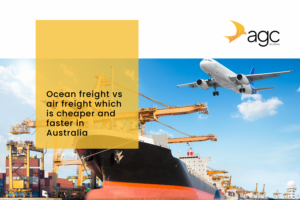
Ocean freight is the backbone of global trade volume for good reason. It is cost-effective for large shipments, suitable for most commercial goods, and offers significant flexibility in container options from full container loads to less-than-container consolidated cargo that lets smaller shippers share space and cost. For Melbourne businesses importing from Asia, Europe, or the Americas, ocean freight handled through the Port of Melbourne is typically the most economical choice for non-urgent cargo.
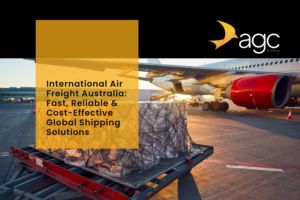
Air freight carries a higher cost per kilogram but delivers in ways ocean freight cannot when timing is critical. Urgent manufacturing components, time-sensitive retail inventory, pharmaceutical products, or high-value goods where speed justifies the premium all represent genuine use cases for air freight through Melbourne Airport. Air freight forwarding accounted for 41 percent of revenue share in the Australian freight forwarding market in 2024, reflecting just how consistently businesses reach for this option when stakes are high.
The right freight forwarder doesn’t push you toward one mode or the other. They assess your cargo, timeline, budget, and risk profile and recommend the option that genuinely serves your interests.
Customs Clearance in Melbourne: What You Need to Know
Customs clearance is where many importers encounter their most expensive surprises, and it’s the area where having an experienced, licensed customs broker makes the biggest difference.
Under Australian Border Force requirements, all goods arriving in Australia must be declared. For shipments valued over AUD 1,000, an Import Declaration must be lodged and all applicable duties, taxes, and charges paid before cargo is released. GST of 10 percent applies to most imported goods, calculated on the taxable importation value which includes the cost of goods, shipping, and insurance. Customs duty rates vary by HS tariff classification, and misclassification is one of the most common and avoidable causes of delays, penalties, and additional assessment costs.
The documentation minimum for clearance includes a completed Customs Entry or Import Declaration, a bill of lading or air waybill, commercial invoices, and any permits required for goods subject to additional import controls. If your goods fall into categories regulated by biosecurity, food safety, therapeutic goods, or other agencies, additional clearances must be obtained before ABF will release the shipment. The regulatory landscape has tightened considerably in 2025 and 2026, particularly for waste-related materials, recycled goods, and certain categories of scrap, where multi-agency assessment is now standard and documentation requirements have intensified significantly.
Australia’s network of Free Trade Agreements is another area where specialist knowledge delivers real financial value. Preferential tariff treatment under agreements with key trading partners, including China, Japan, South Korea, ASEAN nations, and the UK, can substantially reduce or eliminate customs duty on qualifying goods. Capturing these concessions requires accurate country-of-origin documentation and knowledge of the relevant rules of origin, which experienced customs brokers handle as a matter of course.
AGC Global’s customs brokerage service in Melbourne covers this entire landscape, from import declaration lodgement and duty calculation through to biosecurity coordination and Free Trade Agreement assessment, so that clients aren’t navigating these requirements alone.
What to Look for When Choosing a Freight Forwarder in Melbourne
The Melbourne market has no shortage of operators presenting themselves as logistics specialists. Here’s how to evaluate them with precision.
- Licensed customs brokerage capability: A freight forwarder handling your imports without a licensed customs broker in the team is a structural risk. Ensure the operator you engage either holds a customs broker licence or works with a nominated licensed broker and can demonstrate that clearly.
- Mode coverage and carrier relationships: A forwarder who only operates in one mode or through a limited carrier network will struggle to offer competitive rates or flexible solutions when your needs change. Look for genuine capability across ocean, air, and where relevant, project cargo.
- Transparency on costs: International freight quotes can mask significant charges if they’re not presented comprehensively. A trustworthy shipping agent in Melbourne will give you a clear breakdown covering freight, origin charges, destination charges, customs duties, GST, delivery, and any applicable surcharges upfront. Surprises on the final invoice are a red flag.
- Communication and tracking visibility: Digital freight visibility has become a genuine competitive differentiator. Knowing where your cargo is in real time and receiving proactive updates when something changes is no longer a premium feature. It’s a baseline expectation, and providers who can’t meet it consistently are operating from an outdated model.
- Experience with your cargo type: Whether you’re importing vehicles, project cargo, perishable goods, or general commercial freight, the specific experience of your forwarder in your category matters. Generalised logistics competence doesn’t replace category-specific knowledge when your shipment hits a specialist regulatory requirement.
- Track record and references: Ask for case studies or references relevant to your trade lanes. A forwarder with verifiable experience moving cargo between Melbourne and your key origin or destination markets has institutional knowledge that newer entrants simply haven’t accumulated yet.
Why Project Cargo and Vehicle Imports Require Specialist Handling
Not all freight is created equal, and two categories deserve mention for Melbourne importers: project cargo and vehicle importation.
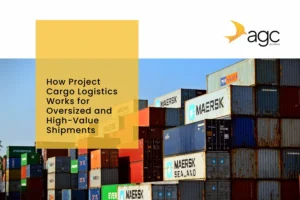
Project cargo covers oversized, heavy-lift, or structurally complex consignments that standard container operations can’t accommodate. Mining equipment, industrial machinery, construction components, and renewable energy infrastructure all fall into this category. The logistics of project cargo require specialist planning, equipment, route surveys, port coordination, and often multi-modal solutions that combine ocean, road, and sometimes rail transport. Engaging a forwarder without genuine project cargo capability for these consignments is not just inefficient; it’s a genuine operational risk.
Vehicle importation from overseas is a distinct process governed by Australian standards compliance requirements, ROVER and RVCS registration, and import approval processes that are separate from standard commercial goods clearance. The documentation and compliance pathway for a vehicle arriving in Melbourne from Japan, the UK, or the US is materially different from a standard commercial shipment, and mistakes in this process are costly to unwind. AGC Global’s dedicated import vehicle service handles this entire compliance and logistics chain with specialist expertise built specifically around Australian requirements.
AGC Global: Melbourne’s Integrated Logistics Partner
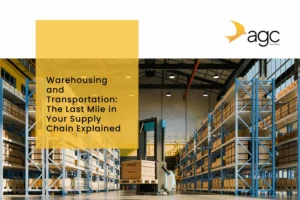
AGC Global operates from Pakenham in Victoria and offers Melbourne businesses a fully integrated international freight forwarding and customs brokerage capability that covers ocean freight, air freight, vehicle importation, project cargo, customs house brokerage, and transportation and warehousing.
As a global logistics partner to some of the world’s most recognised brands, AGC brings negotiation expertise and carrier relationships that translate directly into competitive freight terms for clients. Their Melbourne office extends a global network into the local market, combining international reach with the specific knowledge of Australian regulatory requirements, Port of Melbourne operations, and Victoria’s inland freight infrastructure that Melbourne businesses need.
Whether you’re a business making your first international shipment or an established importer reviewing your logistics arrangements, the conversation worth having begins with your supply chain requirements and works outward from there. That’s exactly the kind of engagement AGC Global is built for.
The Honest Conclusion
Freight forwarding in Melbourne in 2026 operates in a market that’s growing, increasingly complex, and unforgiving of operational gaps. The regulatory environment is tighter. The compliance requirements are more detailed. The cost of getting it wrong, in delays, penalties, and missed commercial windows, is higher than it’s ever been.
The best freight forwarder for your Melbourne business is one with licensed expertise across the full logistics chain, genuine transparency in how they operate, and the willingness to treat your cargo as if the outcome matters to them personally. That combination exists. It’s just worth knowing how to look for it.