There’s a moment every supply chain manager dreads. A critical shipment is delayed. A client is waiting. The cargo is sitting somewhere between a warehouse and a customs queue, and nobody seems to have a clear answer on when it moves next. It’s the kind of situation that costs money, damages relationships, and exposes exactly how much your logistics partner matters.
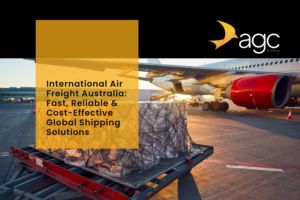
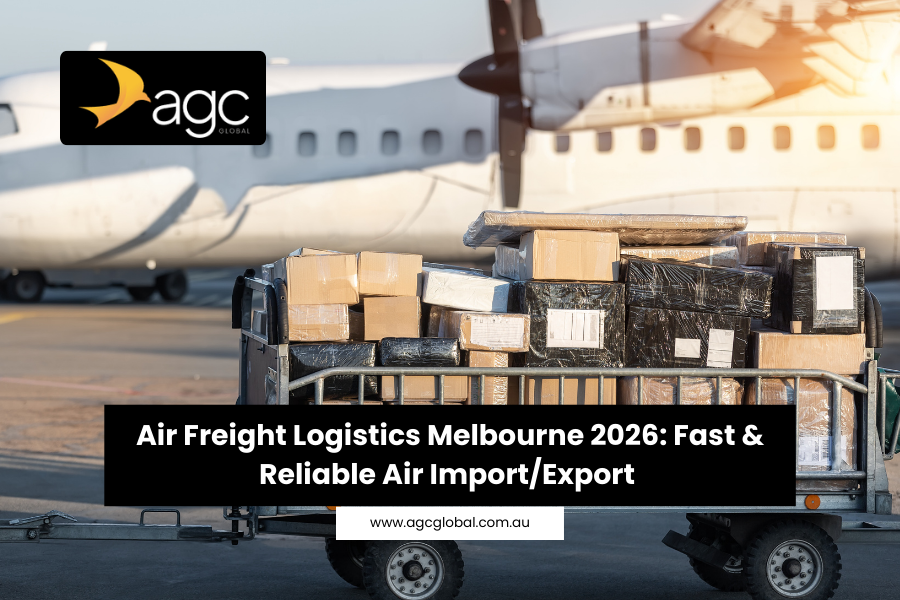
In 2026, Melbourne’s role as a major trade and distribution hub has never been more prominent or more demanding. Businesses importing and exporting across Asia-Pacific and beyond are under real pressure to move goods faster, with greater visibility and fewer surprises. That’s where air freight steps in as the mode of choice for time-sensitive, high-value, and complexity-heavy cargo.
Why Air Freight Is Growing Fast
The numbers behind global air freight tell a compelling story. The air freight market was valued at USD 160.17 billion in 2025 and is estimated to grow from USD 169.53 billion in 2026 to reach USD 225.26 billion by 2031, at a CAGR of 5.85%. The drivers are familiar to anyone managing international supply chains: e-commerce acceleration, pharmaceutical cold-chain demand, high-tech electronics logistics, and the ongoing reconfiguration of global supply routes.
Closer to home, the picture is equally strong. Australia’s freight and logistics market was valued at USD 99.08 billion in 2025, with air freight forwarding accounting for 40.70% of freight forwarding revenue share that year. For Melbourne businesses managing air import and export volumes, that translates to a deeply active market — and one where choosing the right freight partner is a genuinely consequential decision.
Air Freight vs. Ocean Freight: Knowing When to Choose Speed
Not every shipment belongs in the air. But when speed is non-negotiable, the case for air freight is clear. Here’s how the two primary modes compare for businesses evaluating their options:
| Factor | Air Freight | Ocean Freight |
| Transit Time | 1–5 days internationally | 15–40+ days |
| Best For | High-value, urgent, or perishable goods | Bulky, heavy, or non-urgent cargo |
| Cost | Higher per kg | Lower per kg |
| Tracking & Visibility | Real-time, end-to-end | Milestone-based |
| Reliability | Very high schedule integrity | Subject to port delays and rerouting |
| Customs Clearance | Typically, faster | Can involve longer dwell times |
The decision often comes down to what delay costs your business. If missing a delivery window means a production line stopping, a retail launch failing, or a pharmaceutical supply running short, the premium on air freight quickly pays for itself.
What Makes Air Freight in Melbourne Complex
Melbourne isn’t just a domestic distribution point. It’s a gateway with serious international freight volume moving through it daily and the operational complexity that comes with that. Businesses using air freight Melbourne-wide deal with a range of challenges that go well beyond booking a flight and handing over a carton.
- Documentation and Customs Compliance Air imports and exports require precise documentation: airway bills, commercial invoices, packing lists, certificates of origin, and in many cases, permits or phytosanitary certificates depending on cargo type. A single error can ground a shipment at customs and that delay in an air freight environment is felt immediately.
- Dangerous Goods and Special Cargo Some cargo categories, including lithium batteries, chemicals, or temperature-sensitive pharmaceuticals, require IATA-compliant handling protocols. Not every freight forwarder has the expertise or certifications to manage these correctly.
- Airline Capacity and Rate Volatility IATA’s Global Outlook for Air Transport projects air cargo traffic growth of 2.6% in 2026. While demand remains solid, capacity availability and cost structures are not uniform across routes. Businesses without experienced forwarders often find themselves bumped from bookings or absorbing unexpected surcharges.
- Last-Mile Coordination Air freight doesn’t end at the airport. Getting cargo from the terminal to the final delivery point, especially for businesses based in outer metro areas like Pakenham requires coordinated transport and warehousing to avoid delays that undo the speed advantage gained in the air.
How AGC Global Handles the Complexity
Based at 2B Venture Way, Pakenham- in Melbourne’s growing south-east corridor; AGC Global operates as a fully integrated freight forwarder managing both air import and export with an emphasis on reliability and documentation precision.
Here’s how a typical air freight shipment moves through their process:
Step 1 — Quote and Route Planning: AGC assesses cargo specifics including weight, dimensions, commodity type, and destination, then negotiates competitive rates across their global agency network to identify the optimal routing.
Step 2 — Documentation Management: All required paperwork, airway bills, customs declarations, import/export documentation, is prepared and verified before the shipment moves. This is where errors typically happen with inexperienced forwarders; AGC’s team manages this end-to-end.
Step 3 — Cargo Handling and Compliance: Cargo are assessed for any special handling requirements such as dangerous goods classification, temperature control, or fragile packaging protocols and loaded in accordance with IATA standards.
Step 4 — Real-Time Tracking and Communication: Advanced tracking technologies provide visibility from origin to destination, with proactive communication if any issues arise in transit. Clients aren’t left chasing updates.
Step 5 — Customs Clearance and Final Delivery: Customs brokerage is handled in-house, covering compliance with all legal frameworks for both import and export. From clearance to final delivery, the process is managed without the cargo being handed off between disconnected parties.
What Rapid Air Shipping Deadlines Actually Require
There’s a misconception that booking air freight is the hard part. In practice, meeting rapid air shipping deadlines consistently requires coordination across multiple variables simultaneously. Getting the booking is step one. What follows is where experience separates capable forwarders from the rest.
A few things that genuinely matter when deadlines are tight:
- Cut-off compliance — Airlines have strict cargo acceptance cut-offs before departure. Missing by even a short window means the next available flight, which in some markets could be 24–48 hours away.
- Pre-clearance preparation — Having documentation ready before cargo arrives at the terminal eliminates the most common source of delay at the destination.
- Alternate routing options — An experienced forwarder maintains relationships across multiple carriers and knows when to reroute through a connecting hub to protect a delivery commitment.
- Proactive exception management — When something goes wrong (and sometimes it does), clients need a partner who identifies the problem early and moves to a solution, not one who surfaces the issue after the damage is already done.
Industries That Rely on Air Freight in Melbourne
Air freight isn’t a single-industry solution. In Melbourne’s diverse economy, the businesses most reliant on it span several sectors:
- Manufacturing and industrial parts — Just-in-time production can’t wait weeks for ocean freight when a critical component runs out.
- Pharmaceutical and medical equipment — Cold-chain integrity and regulatory compliance make air the only viable option for many medical goods.
- Retail and fashion — Seasonal collections and high-demand product launches depend on getting inventory in-store at precisely the right time.
- Electronics and technology — High-value, time-sensitive components moving through Asia-Pacific trade lanes.
- Perishable food and agriculture — Premium produce exported from Australia requires rapid transit to preserve quality and meet import country standards.
Why Location Matters: Air Freight from Pakenham
Being located at Pakenham in Melbourne’s south-east is more relevant than it might appear. The south-east corridor is one of Victoria’s fastest-growing industrial and commercial precincts, with significant logistics, manufacturing, and warehousing activity. For businesses in Pakenham, Dandenong, Berwick, and surrounding areas, having a freight forwarder with a physical presence nearby rather than a CBD office with no proximity to where the cargo originates really matters when coordination needs to happen quickly.
AGC Global’s Pakenham base, combined with a global agency network, means clients in Melbourne’s outer south-east get both local responsiveness and international reach. The air import export Pakenham connection exists specifically to serve businesses in this precinct who need logistics support that doesn’t require an hour’s drive to have a conversation.
The Bottom Line
Air freight is not just about getting cargo onto a plane. It’s about managing the full chain- from rate negotiation and documentation, through customs, to final delivery- in a way that protects your timelines and keeps your business operating as planned. In a market growing at nearly 6% annually and with Australian freight demand accelerating, the quality of your freight partner is increasingly the difference between supply chain stability and costly disruption.
For Melbourne businesses managing air imports, air exports, or complex logistics requirements across multiple shipment types, AGC Global provides the integrated capability to handle it all under one roof.
Ready to move cargo faster and more reliably? Request a quote at agcglobal.com.au or call 1300 086 205.