Every business that imports or exports physical goods lives with the same quiet tension: you need your cargo to arrive on time, in the right condition, at a price that doesn’t erase your margin. In a year where the global shipping environment is navigating rate volatility, geopolitical rerouting, port congestion, and tightening environmental regulations all at once, that tension has never been more real.
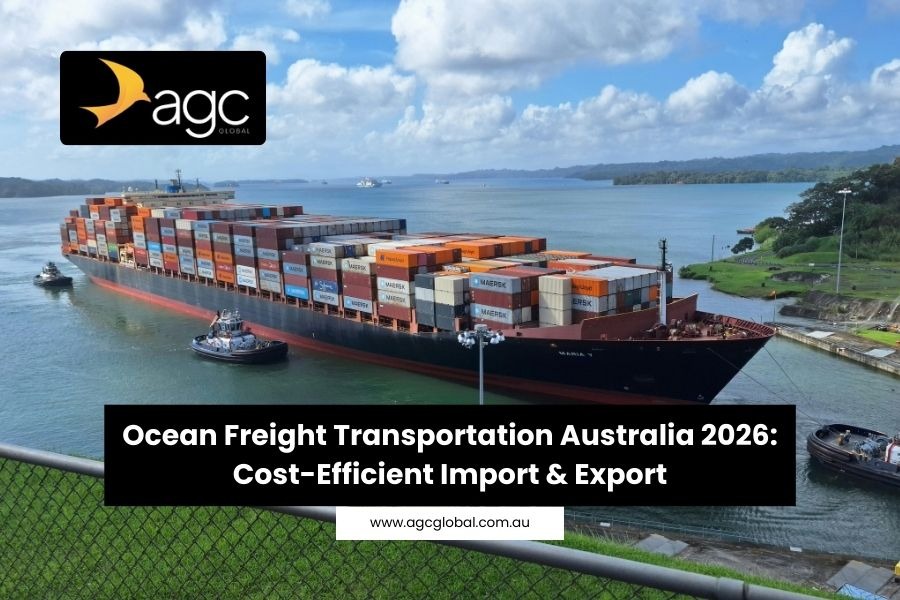
Sea freight remains the backbone of global trade for good reason. Roughly 90% of the world’s goods travel by sea at some point in their journey, and for Australian importers and exporters, ocean freight is often the only economically viable option for large or heavy cargo moving internationally. The question in 2026 isn’t whether to use ocean freight — it’s how to use it smartly.
The Market Right Now: What Australian Importers Need to Know
Before making any logistics decisions, it helps to understand the environment you’re operating in. The ocean freight market heading into 2026 is genuinely complex, and conditions affect both cost and timing in ways that aren’t always visible until a problem surfaces.
Here are the signals that matter most right now:
- Rate environment: Drewry’s World Container Index sat at USD $1,959 per 40ft container in early February 2026; down 7% from the prior period, reflecting softening demand alongside carrier-managed blank sailings designed to prevent a sharper rate collapse.
- Schedule reliability: Sea-Intelligence reported global schedule reliability at 62.8% in December 2025, with an average delay for late arrivals of just over five days. That means roughly 37% of scheduled sailings arrive late- a figure that has direct consequences for inventory planning.
- Red Sea rerouting: Major carriers are weighing a cautious return to the Suez Canal route in 2026. When that transition happens, it will initially cause significant congestion at European hubs and equipment shortages at Far East origin ports conditions that will ripple through Asia-Australia lanes even for businesses not directly shipping to Europe.
- Market growth: Sea and inland waterways freight forwarding in Australia is expected to grow at a 4.52% CAGR through 2031, according to Mordor Intelligence, reflecting continued demand from manufacturing, retail, agriculture, and infrastructure sectors.
- Port congestion: Melbourne and Sydney continue to experience 1–2 days delay during peak periods, with Brisbane at times seeing more. Buffer planning is not optional in this environment, it’s basic risk management.
FCL vs. LCL: Choosing the Right Container Option
One of the most consequential decisions in ocean freight planning is whether to book a Full Container Load (FCL) or Less than Container Load (LCL) shipment. Neither is universally better. The right choice depends on cargo volume, timeline, sensitivity, and cost priorities.
| Factor | FCL (Full Container Load) | LCL (Less than Container Load) |
| Best for | Larger shipments filling most or all a container | Smaller volumes that don’t justify a full container |
| Cost structure | Fixed per container- cost-efficient at higher volumes | Cost per cubic metre- better for small, infrequent loads |
| Transit time | Faster- no consolidation or deconsolidation needed | Slightly longer due to cargo grouping at origin and destination |
| Risk | Lower- cargo shares no space with other shipments | Marginally higher- cargo is consolidated with others |
| Customs | Single declaration, generally simpler | Can involve more documentation touchpoints |
| Flexibility | Good for regular, predictable shipment volumes | Ideal for testing new import lines or managing irregular demand |
The decision isn’t always as straightforward as cargo volume alone. Rate structures, seasonal demand, and the specific requirements of the goods being shipped all feed into the right answer. An experienced freight forwarder will work through these trade-offs with you rather than defaulting to a one-size answer.
The Real Cost of Ocean Freight: Beyond the Base Rate
A freight rate quote is a starting point, not a final number. This is one of the most consistent sources of surprise for businesses managing their first few shipments and one of the areas where working with an experienced forwarder saves the most money over time.
The full landed cost of an ocean freight shipment includes:
At origin:
- Freight rate (FCL or LCL)
- Origin terminal handling charges (OTHC)
- Export customs documentation
- Inland haulage to the port
During transit:
- Bunker Adjustment Factor (BAF) — fuel surcharge
- Peak Season Surcharges (PSS) — during high-demand periods, carriers have announced surcharges of USD $300 to $500 per TEU on key Far East to Australia routes
- Port congestion surcharges
- Currency adjustment factors (CAF)
At destination:
- Import customs duties and GST
- Destination terminal handling charges (DTHC)
- Quarantine and biosecurity inspection fees (relevant for certain commodity types)
- Inland delivery from port to warehouse
The difference between a professional forwarder and a generic booking platform becomes very clear when a shipment hits an unexpected surcharge, a customs query, or a biosecurity hold. Knowing in advance what charges apply to your specific cargo and route is worth far more than a marginally lower base rate.
Why Environmental Freight Responsibility Matters in 2026
Sustainability is no longer a background consideration in shipping. It’s becoming a financial and compliance reality, and Australian businesses importing and exporting via sea freight need to understand what’s changing and why it affects their costs.
The IMO’s CII (Carbon Intensity Indicator) regulations, introduced in 2023 and progressively tightening, require vessels to meet increasingly stringent emissions ratings. Ships rated D or E face operational restrictions, and carriers are being forced to manage their fleets more carefully, which is one factor behind blank sailings, slower steaming, and vessel redeployment decisions that affect schedule reliability.
The EU Emissions Trading System (EU ETS) now covers 70% of maritime emissions in 2026 (for 2025 emissions), rising to 100% from 2027. While this directly affects Europe-linked shipments, the broader carrier network adjustments it drives affect global vessel deployment, including Asia-Australia lanes.
What this means practically for importers and exporters:
- Expect continued environmental surcharges on European-linked routes
- Carriers investing in biofuels, alternative propulsion, and slow steaming programmes will pass some of those costs through rates
- Businesses with ESG reporting obligations should factor the carbon footprint of sea versus air freight into their mode selection decisions- ocean freight emits approximately 20 to 30 times less CO₂ per tonne-kilometre than air, making it the significantly more sustainable mode for non-urgent cargo
AGC Global’s commitment to sustainable and environmentally responsible freight solutions reflects where the industry is heading- and what responsible supply chain management looks like for Australian businesses in 2026 and beyond.
What a Decade of Ocean Freight Experience Delivers
There’s a practical difference between using an experienced freight forwarder and booking direct or through a generic digital platform. That difference is most visible when things don’t go exactly to plan, which, in the current shipping environment, is often enough to matter.
AGC Global brings over a decade of ocean freight expertise to both sea import and export operations, with a physical presence at Pakenham in Melbourne’s south-east. For businesses managing sea import and export in Melbourne, that local anchoring combined with a global agency network means:
- Rate access that wouldn’t be available independently. Long-term carrier relationships allow AGC to negotiate Special Contract Rates and NAC rates that reflect volume and relationship history and not just spot market pricing on a given day.
- Confirmed space and confirmed transit times. In a market where blank sailings and rollovers are a routine capacity management tool, confirmed space at booking is a meaningful protection against the disruption that catches mid-sized importers off guard.
- Documentation managed end-to-end. Sea import and export in Australia involves Bills of Lading, commercial invoices, packing lists, certificates of origin, import declarations, and in many cases biosecurity and quarantine documentation. A single error causes delays that compound particularly when vessel schedules are tight.
- Proactive exception management. Port congestion, vessel bunching, and customs queries are not exceptional events in 2026, they’re expected conditions that require experienced handling, not reactive scrambling.
Industries That Rely on Ocean Freight in Australia
Ocean freight transportation in Australia serves a wide cross-section of the economy. The businesses most dependent on reliable, cost-efficient sea shipping include:
- Retail and wholesale importers: bringing consumer goods from Asia at volumes that make air freight economically impossible
- Manufacturing: both importing raw materials and components, and exporting finished goods to international markets
- Agriculture and food exports: fresh produce, grains, and processed foods moving through refrigerated (reefer) container services
- Construction materials: heavy, bulky inputs where ocean freight is the only viable transport mode
- Automotive: parts and vehicles where volume, weight, and compliance requirements all point to sea
- E-commerce fulfilment: restocking offshore inventory at scale ahead of demand peaks
Getting It Right: A Practical Checklist for Sea Importers
For businesses managing regular ocean freight shipments, or beginning to explore it, a structured approach to planning pays dividends throughout the year.
✔ Book early around known peak windows. Chinese New Year, Black Friday, and Christmas shipping seasons drive booking surges. Late bookings cost more and risk rollovers.
✔ Build transit buffers. With average delays running beyond five days for late arrivals globally, planning to the last possible arrival date is a compounding risk.
✔ Lock in rates where you can. Spot rate volatility on the Asia-Australia lane has been significant. Short-term rate agreements provide pricing resilience that pure spot exposure does not.
✔ Understand your landed cost, not just your freight rate. Know what surcharges, terminal charges, and duties apply to your specific goods and route before committing to pricing.
✔ Work with a forwarder who stays in contact. The most expensive surprises in ocean freight are the ones that surface late. Early visibility and clear communication are what experienced forwarders provide.
Start With a Conversation
Ocean freight is not a commodity where the lowest quote always wins. It is a service where experience, relationships, and operational discipline determine whether your cargo arrives on time, in order, and at a cost that was genuinely planned for.
For Melbourne-based importers and exporters seeking cost-efficient, reliable, and environmentally responsible ocean freight solutions, AGC Global is positioned to deliver exactly that from a team that understands the full picture of what sea freight in 2026 requires.
Request a quote at agcglobal.com.au or call 1300 086 205. AGC Global operates from 2B Venture Way, Pakenham, servicing importers and exporters across Melbourne and beyond.