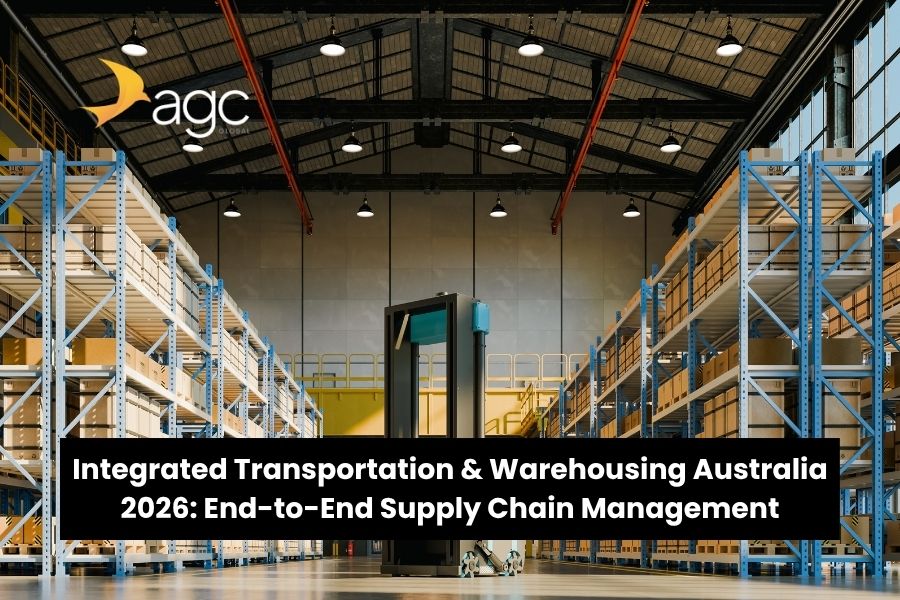
The Australian logistics landscape is changing. The industry will reach its final transition point because all transport and storage operations will become unified as of 2026. Your business operations will experience greater losses because you use multiple companies to handle freight and different companies to provide floor space.
For Australian enterprises, the new gold standard is integrated transportation warehousing. It is about creating a single, fluid motion from the moment a container hits the wharf to the second; the final parcel is dropped at a customer’s doorstep. At AGC Global, we have seen firsthand that when you bridge the gap between the road and the rack, you do not just move goods faster; you move them smarter.
The complete guide explains how end-to-end integration functions as the most valuable competitive advantage for the year 2026 while showing how Pakenham operates as a central hub for Victoria’s supply chain operations.
The 2026 Shift: Why Seamless Logistics Solutions are Non-Negotiable
Why does the industry currently show an excessive focus on achieving integration? Because the Australian market has become incredibly demanding. Between the e-commerce boom and the rise of just-in-time delivery expectations, there is zero room for the handoff lag that occurs when a transport company and a warehouse provider are not on the same page.
The Hidden Costs of Disconnected Logistics
When your logistics are siloed, you aren’t just paying two different bills; you are paying a fragmentation tax. This manifests in several ways that drain your bottom line:
- Data Silos: Your driver knows where the stock is, but your warehouse system thinks it is still in transit. The situation causes stockouts because there is no way to monitor inventory levels and stock levels proceed to exceed required amounts.
- Double Handling: The process of moving goods between temporary storage areas results in substantial labor expenses together with excessive fuel consumption because transportation requires warehouse access during designated operating times.
- Administrative Friction: Managing two sets of KPIs, two sets of invoices, and two customer service teams takes your focus away from your core business.
By moving toward seamless logistics solutions, businesses are effectively collapsing with these barriers. An integrated provider acts as a single point of truth, ensuring that transport and storage integration is a reality, not just a marketing buzzword.
The Rise of Pakenham: Victoria’s New Strategic Heartbeat
If you are operating in Victoria, you have likely noticed the massive industrial growth toward the Southeast. Supply chain management in Pakenham has evolved from a regional convenience into a strategic necessity for businesses looking to bypass the congestion of inner-city hubs while staying perfectly positioned for both Melbourne and regional distribution.
Why Pakenham is Dominating the 2026 Logistics Map
Pakenham represents the sweet spot of Victorian logistics for several reasons:
- Strategic Access: Being near the Princes Freeway and Gippsland corridor is perfect for heavy vehicles. It lets trucks skip city traffic and head straight to the Port of Melbourne or eastern regional markets.
- Modern Infrastructure: 2026 deadline when it finished building advanced specialized facilities that serve specific purposes. The structures function as advanced technology centers which enable 3PL (Third-Party Logistics) operations to handle substantial storage volumes.
- Cost Efficiency: The Pakenham industrial zone provides businesses with both affordable land and business expenses which enable them to offer more affordable warehousing solutions.
For AGC Global Australia, our presence in these key hubs ensures that your goods are stored exactly where they need to be to hit the road the moment an order is triggered.
The Core Pillars of Integrated Transportation Warehousing
What does true integration actually look like in practice? It is more than just having a truck fleet and a warehouse under the same logo. It is about a unified digital and physical ecosystem where information moves as fast as freight.
1. Real-Time Inventory Visibility
In an integrated model, the Warehouse Management System (WMS) and the Transport Management System (TMS) are either the same platform or perfectly synced. This means ghost inventory disappears. The system provides users with real-time visibility into all items displayed on shelves together with all items currently loaded onto trucks and all items undergoing cross docking operations.
2. High-Velocity Cross-Docking
Integration allows for efficient cross-docking, the practice of unloading materials from an incoming semi-trailer and loading them directly into outbound trucks with little to no storage in between. This is the gold standard for reducing warehouse footprint and accelerating the supply chain. Without transport and storage integration, cross-docking is almost impossible to coordinate without significant errors.
3. Unified Accountability and the Single Handshake
A single provider eliminates the blame of the game by taking full responsibility for port delays or inventory discrepancies. This single-handshake approach saves your team dozens of hours in administrative back-and-forth every month.
Solving the Last-Mile Challenge in the Australian Context
In 2026, the Last Mile is where customer loyalty is won or lost. Whether you are shipping B2B industrial parts or B2C consumer goods, the final leg of the journey is the most expensive and complex.
By utilizing integrated transportation warehousing, you can position stock closer to the end of consumer. Our facilities are designed to act as high-velocity distribution centers rather than static storage. This leads to:
- Faster Dispatch Times: Orders can move from Confirmed to on board for Delivery in a matter of hours because the warehouse and transport teams work in the same rhythm.
- Optimized Routing: Our AI-driven logistics tools identify the most efficient routes for Australian traffic, which leads to lower fuel consumption and reduced carbon emissions that Australian companies regard as critical for 2026.
- Flexible Capacity: The integrated models enable your business to expand its storage capacity during peak times, which include EOFY and Black Friday without needing to find additional transport services for increased operational needs.
Integrated transportation and warehousing lower costs by removing vendor handoffs. The model delivers complete operational transparency together with enhanced speed of delivery and one contact point which companies require to satisfy Australia’s e-commerce distribution needs in 2026.
Technology: The Engine Room of 2026 Logistics
The logistics industry of 2026 considers itself a data-driven enterprise which operates trucks as its primary business. The physical movement of goods is now secondary to the flow of information.
IoT and Tracking
Every pallet and every vehicle in a seamless logistics solution is connected. At AGC Global, we use IoT sensors to monitor both the location and condition of your goods. The new security measure establishes mandatory monitoring procedures for high-value goods and sensitive materials.
Predictive Analytics
The historical data allows us to create predictions about your future space requirements and optimal times for shipment consolidation which will help you reduce costs. This proactive approach to supply chain management in Pakenham is what separates a vendor from a true strategic partner.
Sustainable Logistics: More Than Just a Green Badge
Australian industry organizations have made sustainability their primary focus for this year. The integrated logistics system provides a more environmentally friendly solution than the separate system. Why? Because we can eliminate empty miles.
By coordinating transport and storage, we ensure that trucks are rarely running empty. We consolidate outbound orders to reduce trips, lowering both your carbon footprint and transport costs amidst volatile fuel prices.
Navigating International Shipping in an Integrated World
While domestic integration is vital, the “End-to-End” promise must extend to international shipping. At AGC Global Australia, we bridge the gap between global freight forwarding and local distribution.
When your international cargo arrives at the port, our integrated system already has a slot booked for the container to be de-vanned at our warehouse. There is no waiting for a third-party carrier to get around to pick up the box. This speed is critical for maintaining a healthy cash flow and ensuring your stock hits the shelves while demand is high.
Strategic Advice for Australian Business Leaders
I recommend that you execute a Silo Audit on your present supply chain during your operational assessment for 2026. Your team needs to answer these four questions:
- Is our data real-time? If you must wait for a weekly report to know your stock levels, you are reacting to the past rather than managing the present.
- Are we double-paying for handling? Look for areas where goods are moved multiple times between different providers.
- Is our provider based on a growth hub? Facilities in areas like Pakenham offer better long-term scalability and access than land-locked inner-city warehouses.
- Do we have a Single Point of Truth? How many phone calls do you need to make to locate the solution to a problem that has occurred?
AGC Global: Your Partner in End-to-End Logistics
At AGC Global, we don’t just provide rack space; we provide a competitive advantage. Our approach to integrated transportation warehousing is built on the core Australian values of transparency, reliability, and doing the job right the first time.
Our Fleet and Capabilities
Our fleet handles everything from urgent last-mile courier runs to heavy bulk haulage. Paired with our tech-enabled warehouses, we basically act as a plug-and-play logistics department for your business.
Whether you’re a local manufacturer needing supply chain management in Pakenham or an importer dealing with the headaches of international shipping and 3PL, we’ve got the gear and the expertise to help you scale without stress.
The Future of Warehousing: Beyond the Four Walls
Looking toward the end of 2026 and into 2027, the role of the warehouse is changing. It is becoming a Value-Added Center. Because our transport and storage are integrated, we can offer services like:
- Kitting and Assembly: Finalizing product sets right before they are loaded onto the truck.
- Custom Labeling: Adapting products for specific Australian retailers or regional requirements.
- Returns Management (Reverse Logistics): Handling the complex flow of returned goods and getting them back into “available” stock faster than ever before.
This level of service is only possible when the warehouse team and the transport team are part of the same strategic unit.
Conclusion
Logistics should be the engine driving your growth, not the anchor holding you back. Moving to an integrated transportation warehousing model, you’re not just simplifying your daily operations; you’re supercharging your overall efficiency.
In a market as vast and tricky as Australia, you need a partner who can navigate the road, the port, and the warehouse all at once. AGC Global Australia provides the seamless logistics solutions that let you get back to focusing on your customers while we handle the heavy lifting.
Ready to streamline your 2026 operations?
Contact AGC Global today for a custom audit to streamline your supply chain management in Pakenham and international shipping. Let’s get your business moving.
Frequently Asked Questions
What are the benefits of integrated transportation and warehousing?
Integrated transportation warehousing eliminates the gap between storage and delivery. By using one provider for both, you reduce double-handling costs, improve data accuracy, and speed up your lead times. In the fast-paced 2026 market, this integration is the most effective way to ensure seamless logistics solutions from port to door.
Why is Pakenham a good location for supply chain management?
Supply chain management in Pakenham offers a strategic advantage by providing easy access to the Princes Freeway and Gippsland corridor. It allows heavy vehicles to bypass Melbourne’s inner-city congestion while maintaining a direct link to the Port of Melbourne, making it an ideal hub for both regional and metropolitan distribution.
How does transport and storage integration reduce logistics costs?
When you combine transport and storage, you remove the “fragmentation tax.” You no longer pay multiple administrative fees to different vendors, and you eliminate “empty miles” by coordinating outbound deliveries directly with warehouse stock levels. This efficiency significantly lowers the cost per pallet.
Can integrated logistics help with international shipping?
Absolutely. A truly end-to-end provider manages the transition from international shipping terminals to the warehouse floor. This prevents expensive “demurrage” fees at the port and ensures that your imported goods are de-vanned and ready for local distribution the moment they arrive.
What technology is used in modern Australian supply chains?
In 2026, leading providers like AGC Global Australia use IoT sensors to track cargo condition and AI-driven predictive analytics. This technology helps businesses forecast their space requirements and monitor high-value goods in real-time, moving from reactive tracking to proactive management.