Look, let’s talk straight: trying to move gear across the globe in 2026 is a massive headache. Between the jumpy fuel prices, messy global trade politics, and the fact that Australia is basically at the bottom of the world, getting your cargo from A to B is enough to blow any budget.
If you’re running a business here, managing procurement, or heading up a logistics team, you’re probably feeling the pinch. Margins are getting squeezed tighter than a rusted bolt on a farm gate, and your customers still expect a fair price even while your overheads are hitting the roof.
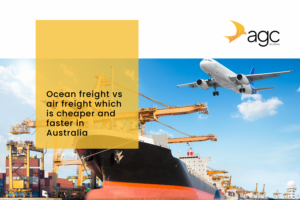
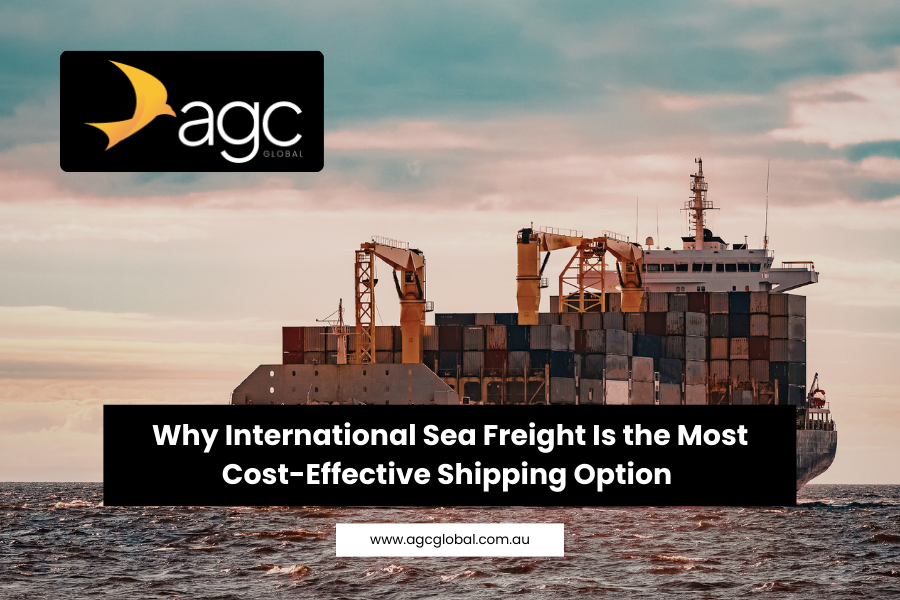
When you sit down and look at your supply chain, the biggest lever you’ve got to protect your bottom line is how you move your stuff. Sure, air freight has that “need for speed” appeal, but international sea freight is still the undisputed heavyweight champ for keeping costs down.
In this deep dive, we’re going to get into the nitty-gritty of why ocean freight services are still the backbone of Aussie trade, and how using the right international logistics solutions can give your business a serious leg over the competition.
1. The Economy of Scale: Why Bigger is Always Cheaper
The primary reason sea freight shipping wins on price comes down to simple physics and economics: the economy of scale.
Think of how difficult it would be to transport 20,000 tonnes of iron ore or 5,000 refrigerators. You would need an air force of cargo aircraft, thousands of litres of high-grade aviation fuel, and a small army of pilots to carry it out by air. To do it by the sea? You need one ship.
The Mathematical Advantage
Contemporary mega-ships of international container shipping are capable of over 20,000 TEUs. Spreading fuel, crew, and port costs across that volume drives the cost per item down to cent, not dollars. For an Australian retailer importing consumer electronics or apparel, this scale is the difference between a viable product and a financial loss.
FCL vs. LCL: Flexibility for Every Budget
The best part of the maritime freight services is that even though you are not a multinational corporation, you still have a chance to enjoy the benefits.
- Full Container Load (FCL): When you have a volume that is sufficient to fill container of 20ft or 40ft, you are charged a flat rate. This is the gold standard for predictable budgeting.
- Less than Container Load (LCL): Transport a small number of pallets and pay just the space you take which makes use of overseas cargo transport affordable to Australian SME.
2. Navigating the 2026 Landscape: Stability in an Uncertain World
By 2026, international logistics is much more comfortable than it was at the beginning of 2020. That does not imply that it will sail smoothly, and fuel prices are unpredictable as well as environmental rules are tightening around the world.
Despite this, ocean freight services have remained exceptionally strong. Shipping lines have continued to invest in slow steaming and ultra-efficient engines to ensure that their prices remain low. For Australian businesses, this translates to price stability.
When you book international logistics solutions via sea, you are often looking at rates that stay relatively steady over months, rather than the “spot rates” of air freight which can double overnight due to a spike in jet fuel or a sudden surge in demand for courier services. For an Aussie business trying to plan a quarterly budget, that predictability is worth its weight in gold.
3. The “Weight” of the Situation: Volume vs. Mass
In the world of logistics, weight is money. However, air freight and sea freight calculate that “weight” is very different.
Air freight uses a “chargeable weight” formula that penalises bulky but light items, as well as heavy items. If you’re shipping something dense, like automotive parts, industrial machinery, or even bulk bags of coffee beans, the cost of sending it via plane is astronomical.
International sea freight, conversely, is far more forgiving. While there are weight limits for road safety once the container hits Australian soil, the maritime journey itself is much less sensitive to weight-to-volume ratios. This makes global shipping services the only logical choice for:
- Construction materials and steel.
- Heavy industrial machinery.
- Bulk agricultural exports.
- Large-scale furniture and whitegoods.
4. The “Green” Dividend: Saving More than Just Money
The Australian way in 2026 means taking care of the environment. The carbon footprint of the products that consumers in Perth to Brisbane consume is getting under scrutiny. When your green product was flown half a world, then its green status suffers a huge blow.
Sea freight shipping is significantly more sustainable than its airborne counterpart.
Industry Fact: A large container ship will produce approximately 10-15gms of CO 2/ tonne-km on average; a cargo airplane produces more than 500gms.
By opting for maritime freight services, you are reducing your carbon footprint by up to 90% compared to air transport. This does not only feel good but it is a strong marketing tool. Highlighting your use of sustainable export shipping services can build significant brand loyalty in the Australian market, potentially allowing you to command a premium price for your goods.
5. Managing the “Hidden” Costs of Australian Logistics
Shipping to Australia presents unique challenges. We are an island nation with some of the strictest biosecurity and customs regulations on the planet. If your international container shipping isn’t handled correctly, a “cheap” quote can quickly turn into an expensive nightmare.
This is where AGC Global Australia steps in. A professional logistics partner manages the “hidden” costs that many DIY shippers miss:
- Demurrage and Detention: If your paperwork isn’t right and your container sits at the Port of Melbourne or Sydney for too long, the fees can be eye-watering.
- Customs Valuations: Correctly classifying your goods ensures you aren’t overpaying on GST or duties.
- Biosecurity Compliance: Avoiding “tailgate” inspections through proper cleaning and documentation saves time and hundreds of dollars in inspection fees.
By using integrated international logistics solutions, you ensure that the low price you were quoted at the start of the journey is the price you pay at the end.
6. Strategic Inventory Management: Using the Ocean as a Warehouse
We have to be “fair dinkum” here: sea freight is slower than air freight. A shipment from Shanghai to Sydney might take 18 to 25 days, whereas a plane takes three.
However, savvy Australian businesses turn this “lead time” into a financial advantage through strategic inventory management. By planning and maintaining a “buffer” of stock, you can use the ocean as a floating warehouse.
Why pay for expensive warehouse space in Sydney or Melbourne when your stock can be moving across the ocean at a fraction of the cost? By mastering the art of the “rolling inventory,” you can virtually eliminate the need for emergency air freight, keeping your overall logistics spend at rock bottom.
7. Infrastructure and Tech: Sea Freight in the Digital Age
By 2026, the global shipping services are not a black box anymore. The high level of tracking and IoT (Internet of Things) also implies that you can monitor the temperature, humidity, and the exact GPS position of your container in real-time.
In the past, companies preferred using the air freight method when transporting high-value products on the basis that it was secure. Today, with smart containers and enhanced port security, overseas cargo transport by sea is just as secure. Reduced risk means lower insurance premiums, yet another way sea freight keeps your total landed cost down.
8. Why International Logistics Solutions Need a Local Touch
You can find plenty of overseas freight forwarders online, but they don’t know the Australian market like AGC Global. Whether it’s navigating the specific union rules at our terminals or understanding the seasonal peaks of the Australian retail cycle (like the lead-up to EOFY or Christmas), local expertise is non-negotiable.
When you use export shipping services that are managed locally, you get:
- Real-time updates in your own timezone (no more 2 AM emails to Europe).
- Clear communication without the language barriers.
- Local relationships with trucking companies and wharfies to ensure your container gets off the dock and to your door without a hitch.
Sea Freight vs. Air Freight: The 2026 Comparison Table
| Factor | International Sea Freight | Air Freight |
| Cost Efficiency | ⭐⭐⭐⭐⭐ (Excellent) | ⭐ (Expensive) |
| Capacity | Massive (Bulky/Heavy) | Limited (Small/Light) |
| Carbon Footprint | Low (Eco-friendly) | High |
| AU Lead Time | 2–6 Weeks | 3–7 Days |
| Predictability | High Stability | Volatile Pricing |
| Best For | Stock Replenishment | Emergency/Perishables |
9. The Real-World Impact: A Case Study
An example of an Australian business importing premium kitchen appliances. Assuming that they have to fly 100 ovens to satisfy an unexpected demand, then the cost per oven of the freight could be in the range of $400. That figure must be transferred to the customer, and the oven may become 2000 dollars.
If that same business uses international sea freight and plans their stock levels six weeks out, the freight cost per oven drops to roughly $35. Now, they can retail that oven for $1,650.
In a market such as Australia, cost of living is a key determinant to consumers in 2026, so that $350 price cut is no mere saving, but the mark between dominance and being forced out of the market.
10. Common Pitfalls to Avoid in Sea Freight
Although it is the cheapest alternative, you may easily fall victim unless you are keen. This is what professionals are on the hunt of:
- Misunderstanding in Incoterms: It is important to be aware of your responsibilities in terms of who takes care of the freight and insurance. Is it FOB (Free On Board) or CIF (Cost, Insurance and Freight)? Getting this wrong can double your costs.
- Under-insuring: Just because it’s cheaper doesn’t mean you should skimp on Marine Insurance. Accidents happen, and “General Average” is a maritime law you don’t want to learn about the hard way.
- Poor Packing: Sea freight involves more handling than air freight. If your goods aren’t palletised and wrapped correctly, the money you save on freight will be lost on damaged stock.
Conclusion: Ready to Optimise Your Shipping?
At the end of the day, the numbers don’t lie. In 2026, international sea freight remains one of the most powerful tools Australian businesses can use to reduce overheads and expand market share. It delivers the ideal balance of high-volume capacity, cost efficiency, and more sustainable shipping practices.
If your business can plan its inventory cycles with a bit of foresight, the savings you’ll make by choosing the ocean over the air are substantial. Don’t leave your logistics to chance or to an automated algorithm. Partner with a team that knows the Australian waters and global lanes like the back of their hand.
Take Control of Your Logistics Today
Partner with AGC Global Australia for reliable, cost-effective international shipping tailored to your business needs.
Contact AGC Global today for a tailored quote and see how much you can save on your next shipment.